2
Case Study
SmartPlug Isolation
SmartPlug® isolation keeps divers safe during North Seas decommissioning
TDW Offering: Advanced Isolation and Repair Solutions
Technology: SmartPlug® Inline Isolation for decommissioning (Double Block isolation with two fully independent barriers)
Project Location: North Sea L8-G platform and associated pipeline system
Decommissioning is part of the natural cycle of the E&P business. Once onshore and offshore oil and gas fields reach the end of their economic life, it is likely their associated pipeline assets will, too. To comply with mining regulations, optimize production and minimize costs, operators will eventually need to replace or decommission those assets. Safety is paramount throughout these decommissioning projects, but it’s not the only issue operators have to contend with. Environmental regulations also influence the decommissioning strategy as do project costs, especially in the case of larger assets such as platforms and associated pipelines.
Decommissioning a natural gas pipeline is a multi-step process that typically includes disconnecting the line from the supply, removing the product, cleaning the pipeline and then abandoning, inerting or fully removing it from the system. Isolation technology is often used to create a safe work zone during these activities.
When the owners of the North Sea L8-G platform decided to decommission it along with sections of the connected pipeline, the pipeline owner, Noordgastransport, B.V. (NGT) knew it couldn’t shut down its system while work was underway. NGT moves product from more than 75 platforms to its onshore gas treatment plant in Uithuizen and its customers rely on continuous service. NGT avoided depressurizing the entire pipeline and interrupting the supply schedule through advanced inline isolation performed by global pipeline solutions provider T.D. Williamson (TDW). By using SmartPlug® technology to provide a reliable double block isolation with two fully independent barriers, TDW helped keep the decommissioning operation safe and efficient.
Offshore pipeline isolation achieved in space and access constraints
NGT plays an important role in the processing and delivery of North Sea natural gas used both in and outside the Netherlands. The company’s system has a daily capacity of 42 million cubic meters (m3) and comprises two offshore platforms, an onshore treatment facility and approximately 470km (292mi) of pipelines. That includes a 178-km (110mi) transportation pipeline on the seabed that moves natural gas and condensate from the riser platform to shore.
The L8-G production platform began operation in 1988 but was shut down in 2016. Decommissioning activities included abandoning a 14-inch pipeline section between the L8-G platform and a sidetap at the L11-B platform. To comply with international regulations, two fully independent double block barriers were required to guarantee the safety of the divers disconnecting the pipework. Double block barriers provide complete isolation redundancy should either one of the barriers fail in any way.
To meet the requirements for true double block isolation, NGT chose to deploy a remote-controlled, tetherless SmartPlug® pipeline pressure isolation tool, whose patented design incorporates dual-redundant and fully independent isolation plug modules. The SmartPlug® tool fully complies with International Marine Contractors Association (IMCA) guidelines for isolation and intervention.
In addition, the typical SmartPlug® set configuration (Figure 1) meets the double barrier definition of DNV-RP-F113/3:
- Each barrier is independent of the other and can retain full pressure alone.
- The two independent locking systems are each capable of retaining the force from the full differential pressure.
- Each barrier is independently tested to ensure it can withstand 1.43 times the operational pipeline pressure.
- Integrity of each seal is monitored remotely throughout the operation.
Choosing to isolate their pipeline with SmartPlug® technology solved the operator’s key concern—that is, diver safety—but another issue remained: The pipeline had not been pigged since it was commissioned. To make the pipeline piggable again, NGT fitted a temporary valve and temporary pig trap to the topside pipework, which reduced the space available for loading the SmartPlug® tool.

SmartPlug® technology was adapted to meet offshore space constraints
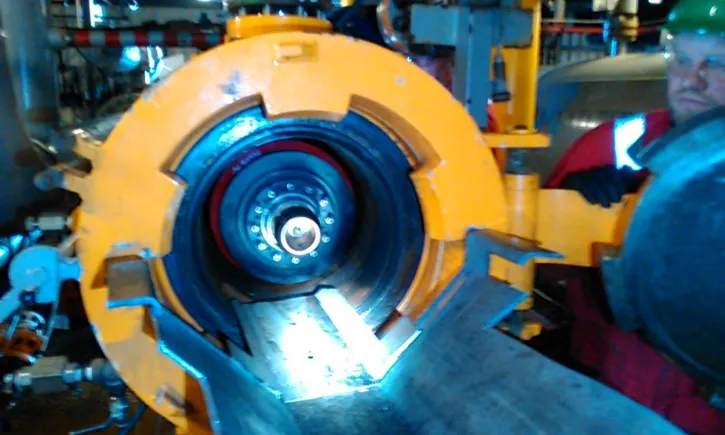
To overcome the issue of limited space topside and ensure first-time double block isolation success, TDW engineered the tool to be loaded into the pig trap in two parts connected by a fully articulated ball joint (Figure 2). Once engineering was complete, the 14-inch tool was assembled and factory acceptance testing was performed at the TDW Center of Excellence in Stavanger, Norway. The tool and crew then mobilized from Stavanger to the North Sea work site.
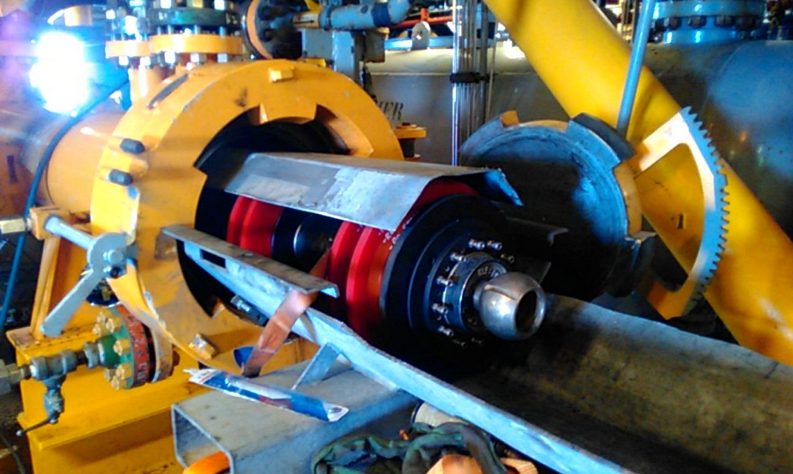
TDW initiated the isolation process by launching the SmartPlug® tool and four cleaning pigs—one brush pig and three decommissioning pigs (Figure 3). Propelled by seawater, the SmartPlug® tool and pigs travelled 14.4km (8.9mi) through the topside components to the subsea set location. TDW used its proprietary SmartTrack™ to provide crucial tracking and communication with the tool and pigs in the decommissioning train throughout the operation.
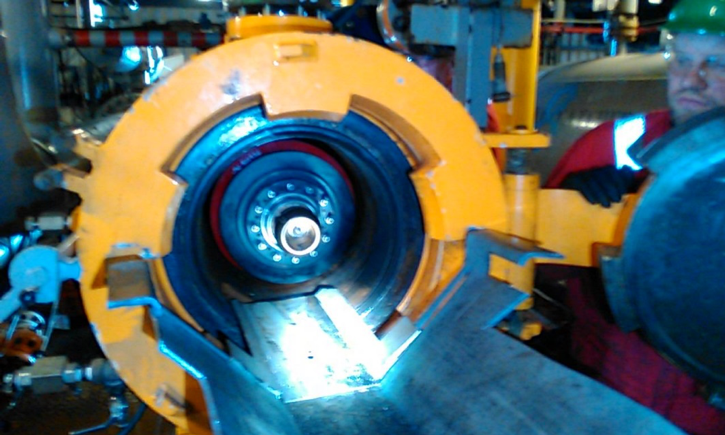
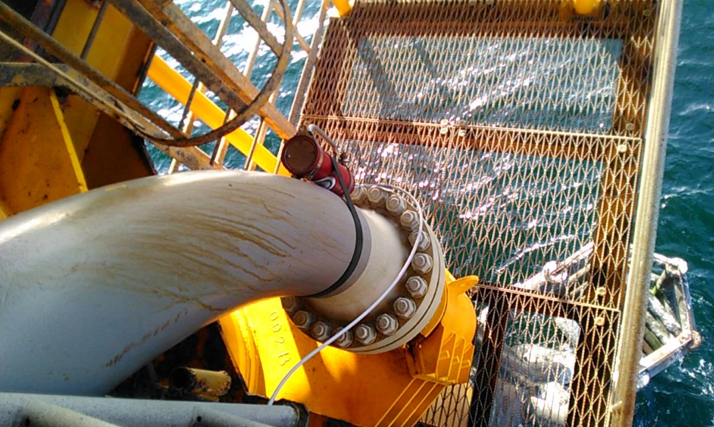
SmartTrack™ technology allows for remote tracking and independent identification of inline tools. In this case, two of the four pigs and the SmartPlug® tool in the decommissioning train were outfitted with SmartTrack™ transponders (Figures 4 and 5). This facilitated accurate positioning of the decommissioning train and provided continuous monitoring and tracking data throughout the operation.
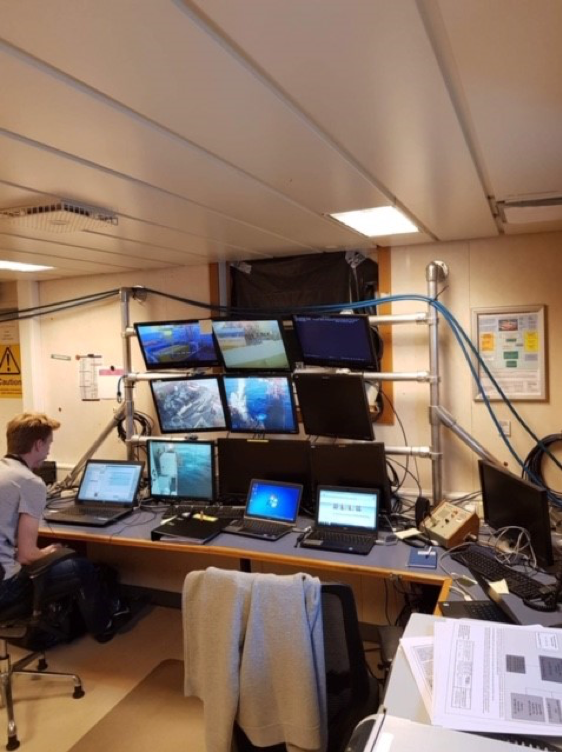
Once the SmartPlug® tool reached the set location, it was activated to isolate against the line pressure of 83 bar (1,203 psi). Piping upstream of the tool was depressurized to ambient subsea conditions to allow the decommissioning to proceed.
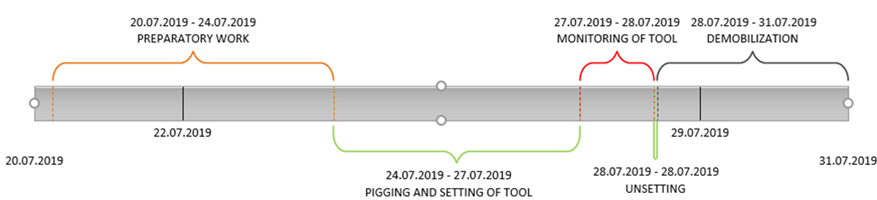
After TDW issued the Isolation Certificate confirming that the line was safely isolated, divers disconnected the pipeline and installed a blind flange behind the SmartPlug® tool, allowing NGT to proceed with the planned decommissioning activities on the 14-inch pipeline. Although TDW generally unsets and retrieves the SmartPlug® tool after an isolation operation, in this case NGT requested the unset tool be left in the pipeline permanently. This reduced costs associated with subsea tool recovery such as extended diving vessel services and rental of subsea valve and subsea pig trap.
TDW delivered safe inline isolation for efficient offshore decommissioning
By choosing to isolate the pipeline section with a SmartPlug® tool, NGT:
- Provided a safe environment for the divers to perform the decommissioning works.
- Avoided the expense, environmental impact and project schedule associated with depressurizing and venting the pipeline inventory.
- Maintained uninterrupted production in adjoining pipelines downstream of the isolation.
Achieved significant cost savings by eliminating the costs of subsea tool recovery.
Explore more SmartPlug® isolation success stories
Read about how SmartPlug® technology has been applied across offshore maintenance, valve replacement, pipeline isolation, and decommissioning projects.
Download a printable version of this case study here.